A Midwinter Singing Circle with Familiar Songs
Plan a midwinter singing circle with familiar songs, a welcoming refrain and a flexible order so guests can join in, listen or share a tradition.
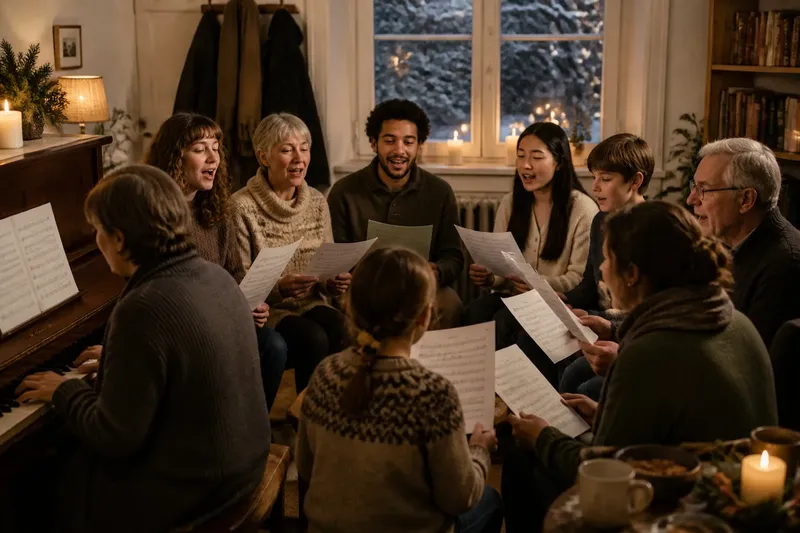
The common mistake with a midwinter singing circle is picking songs for their seasonal mood before checking whether anyone can join in. The cost is a room of courteous listeners and a host carrying every chorus alone. Choose familiar songs first, then make room for one that belongs especially to your guests.
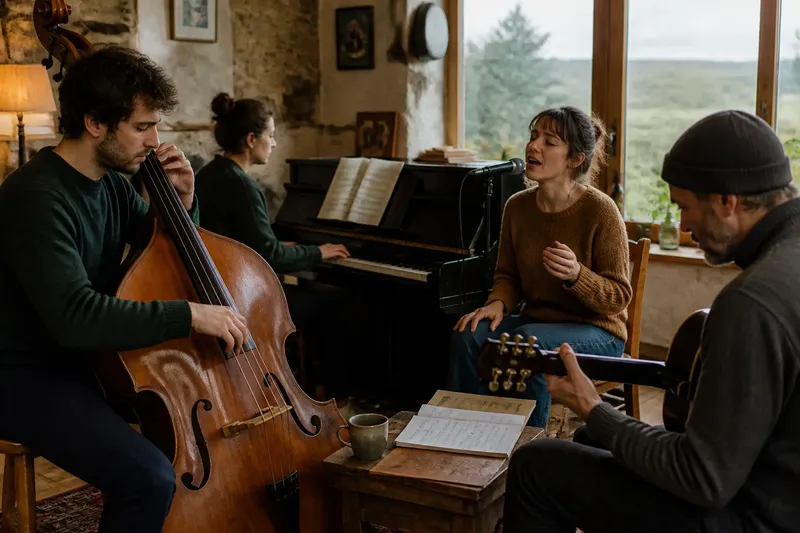
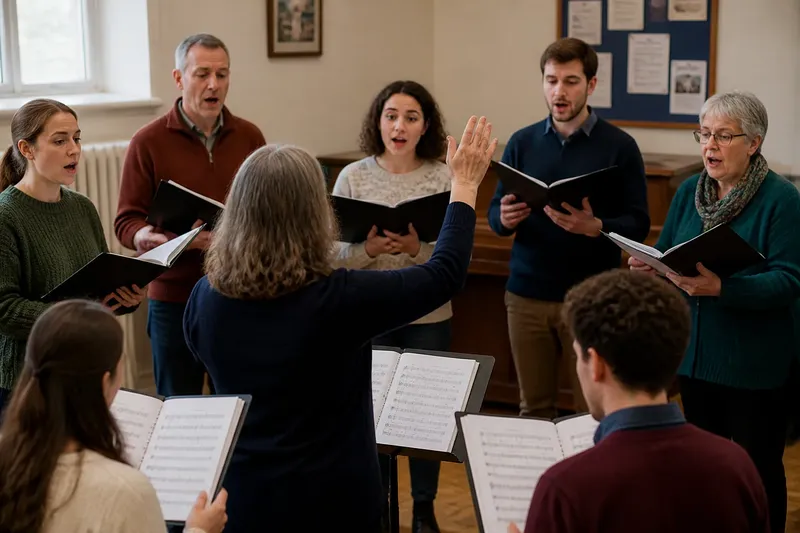
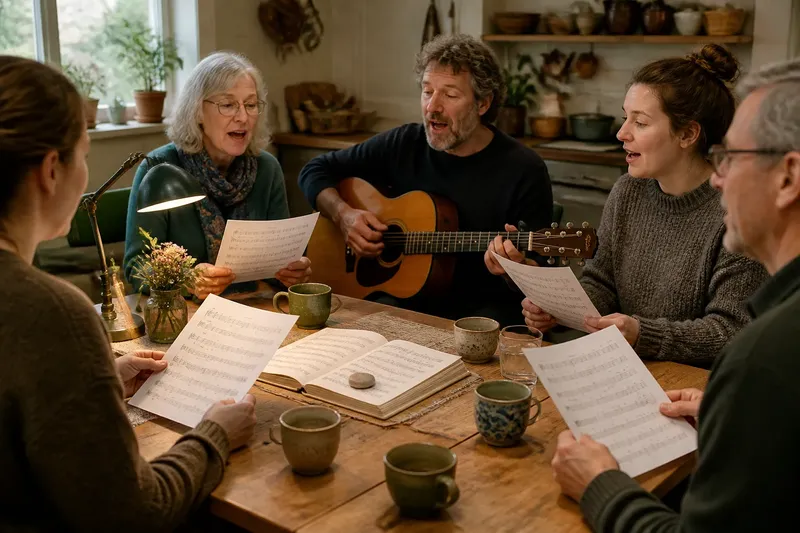
A singing circle need not be a choir or a performance. It could gather in a sitting room after a meal, with a piano in the corner and coats drying by the door. The useful question is not which songs belong to winter, but which songs this particular group can enter without feeling put on the spot.
Choose songs your guests can recognise or learn quickly
Familiarity is personal. A family gathering may bring back songs remembered from school or home; a neighbourhood group may include people with different traditions and first languages. Ask a few guests what they would enjoy, and build a short core around songs more than one person knows.
For a mixed group, pair recognisable seasonal songs with tunes that can be learnt by ear. A repeated refrain gives newcomers a clear entry point even if they do not know the verses. For children, a short chorus with a steady pulse may work better than a long verse of unfamiliar words. Guests who prefer to listen can still enjoy a song they recognise without being asked to stand or sing.
Use these checks to decide which songs belong in the shared set:
- Recognition: If several guests can hum the tune, keep it as a group song; if only the host knows it, offer it as an optional solo or choose another tune.
- Vocal comfort: If the melody feels comfortable for the people who will lead it, keep the key; if it sits too high, ask an accompanist to lower it or replace the song.
- Words: If guests can follow the lyrics on a clear, large-print page, use the full song; if the wording is unfamiliar or disputed, agree on a version or sing the shared refrain.
- Entry point: If the song has a repeated chorus or an obvious cue, invite everyone to join there; if it has no clear joining point, have one person lead it or pick a different song.
- Tone: If the song suits the gathering and its guests, include it; if it may feel difficult for someone, offer a gentler alternative or leave space for a non-seasonal choice.
- Length: If the group can sing it without losing the gathering’s conversational feel, keep it; if it becomes a recital, shorten it to a verse and refrain or move on.
A song loved by the host but unfamiliar to everyone else need not disappear; it may work as a short solo. If a tune is known but its lyrics vary between families, agree on one version beforehand or sing only the refrain. That small decision avoids an awkward pause over which words come next.
Arrange the songs to make joining feel natural
Begin with something recognisable and undemanding, not the most ambitious or emotionally intense song. A steady chorus lets people hear the room before adding their own voices. After that, vary the energy: a lively song can lift the room, while a quieter one offers a rest.
Place an unfamiliar tune after a song with a similar feel, so guests do not have to adjust to a new mood and new words at once. Save a particularly meaningful song for a point when people have settled. The order should invite participation, not demand a particular emotion.
Think of the sequence like setting cups on a table: keep the first one easy to reach, and leave room for people to choose. A useful shape is a familiar welcome, a bright refrain, a quieter song, an optional guest choice and a closing tune everyone knows. If people are lively, add another chorus; if conversation is taking over, shorten the set and finish on a song the room can carry.
Say you are hosting a small gathering, and your starting point is a well-known winter chorus plus a guest’s family song that nobody else knows. You open with the shared chorus, ask the guest whether they would like to teach its repeated line, and place that song between two familiar choices. The observable result is that guests have a clear moment to join, while the guest can choose whether to lead or simply share the tune; the trade-off is that you may sing only the refrain rather than the whole song.
Keep the arrangement simple and audible
One confident singer can start the melody, with everyone else joining at the refrain. A pianist or guitarist can provide a quiet pulse, but the words should remain easy to hear. With no instrumentalist, a spoken count or a hummed starting note may be enough.
Choose a comfortable key before guests arrive. If a tune sits too high, ask the accompanist to transpose it; if nobody can lead the melody comfortably, replace it rather than asking people to strain or guess. For an unfamiliar song, teach only the refrain: sing it once, invite the room to echo it, then let one person lead the verses.
Printed lyrics can help without turning the gathering into a reading exercise. Use clear type, generous spacing and one song per page where practical, with the refrain easy to find. If you project words on a screen, keep enough light in the room for people to see one another as well as the lyrics.
Let listening count as taking part
Not everyone wants to sing, and a successful circle does not require every guest to perform. Some may hum, tap a finger, turn pages, listen closely or join only on a familiar line. Before the first song, say that guests are welcome to sing, listen or come in when they feel ready.
Offer invitations rather than assigning parts. “Join us on the chorus if you know it” is kinder than asking a quiet guest to sing a verse. If someone offers a song, ask whether they would like the group to join the refrain or simply listen. That choice lets the contributor set the level of participation.
For guests who find the season tender, a gentle instrumental pause or a familiar non-seasonal song can provide breathing space. Silence need not be fixed or explained. A listener’s presence is part of the gathering, too.
Which singing-circle plan fits your gathering?
What works for a family gathering?
Choose songs different generations recognise, and make the first tune easy to enter. Children can request a refrain or lead a line if they want to, while adults carry the verses when needed.
What suits a group that does not know one another well?
Use a small set of recognisable songs and explain the joining point before each one. A repeated chorus is a kinder invitation than expecting strangers to sing unfamiliar verses together.
How can I include guests with different voices or abilities?
Keep the set seated, print lyrics clearly and choose melodies that do not demand a wide vocal range. Offer listening as an equal option, and make sure the leader’s cues are easy to see and hear.
What if guests bring different musical traditions?
Ask contributors what they would like to share and how they would like the room to take part. A short refrain, a call-and-response line or attentive listening can honour a song without assuming everyone knows its words or customs.
Follow the room rather than the song list
Prepare more songs than you expect to use, but do not treat the list as a schedule to complete. People leaning in may be ready for another chorus; people turning back to conversation may be telling you the moment has passed. Leave space between songs for a story, a drink or a quiet pause.
Agree beforehand who will give the starting note, turn pages and cue the next song. If there is an accompanist, settle the keys and order together, and keep a spare lyric sheet beside the person leading. These small arrangements let the host stay present instead of managing every detail at once.
A midwinter singing circle with familiar songs works best when the invitation is clear and the demands are modest. Let the shared refrains do the welcoming, and make the guest’s own tradition an invitation rather than an obligation. As people leave, a quiet reprise of the opening tune can give those who were listening a final chance to join on their own terms.