How to Set Up a Kitchen Table for Group Singing
Set up a kitchen table for group singing with readable song sheets, clear sightlines and an easy starting cue, so guests can join without a formal rehearsal.

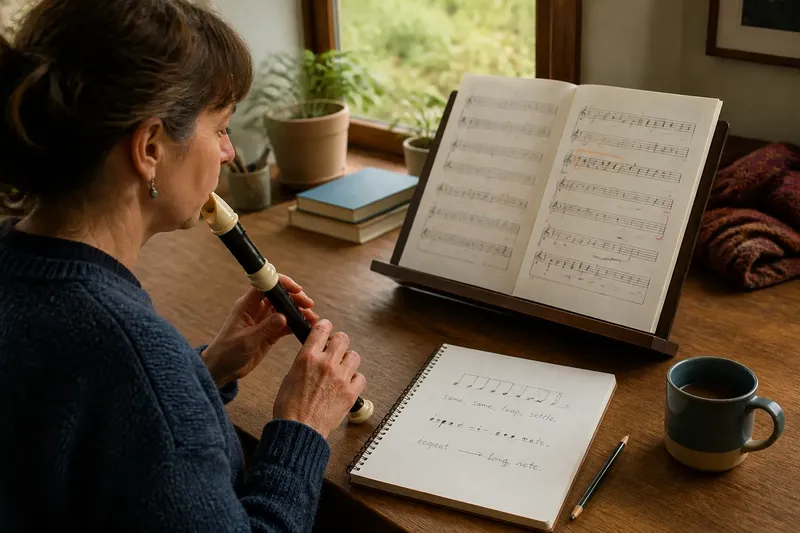
The common mistake with group singing at home is waiting for a dedicated music room, a piano or a polished programme; the cost is that an ordinary table stays unused. A kitchen table for group singing needs little more than clear pages, comfortable seats and a way to start together. Rather than claiming a single history for how households used their tables, it is more useful to treat the table as practical shared space: it can hold music while everyone remains part of the conversation.
Arrange the room so singers can see one another
Choose a room where people can sit comfortably and hear the voices around them. Move chairs so faces are visible, then clear a patch of table for song sheets while leaving space for cups and elbows. If a tall chair blocks someone’s view, shift the seating before the singing begins.
Put a desk lamp where it lights the pages without shining into anyone’s eyes. Keep the table low-key: it is more like a tray for shared tools than a conductor’s podium. The pages should be easy to reach, but nobody should have to look down so long that they lose sight of the group.
Prepare song sheets people can follow
Choose songs with a clear tune and words that are easy to hear and read. A familiar chorus gives newcomers an uncomplicated way in; one confident singer or instrumentalist can carry the verses. You might use folk songs, rounds, simple part songs or familiar tunes from a family songbook, provided the range and arrangement suit the people present.
Before guests arrive, put the songs in playing order and check that the print is legible from the seats. Keep a book open with a clean paperweight, or arrange permitted copies in a single pile. If an edition includes use or copying guidance, follow it rather than assuming that every page can be reproduced freely.
Give everyone a clear first cue
Say whether you plan to sing together, play a tune or try simple parts. Agree on one starting signal, such as a spoken “ready?”, a count-in or a hummed first note. A cue works like the handle on a shared tool: it gives everyone the same place to begin.
Say you have invited a neighbour with a guitar and a friend who has never sung from notation. Start with a tune both recognise, let the guitarist play the opening, and invite everyone to join the chorus. The expected result is a clear group entry, while the new singer can participate without decoding the notes.
Keep the first songs within reach
Begin with unison singing or a chorus before asking anyone to hold a separate part. After a first try, ask one focused question: was the tune too high, were the words difficult to follow, or was the starting cue unclear? Change one thing, then try again. If a part song feels uncomfortable, return to unison instead of turning the session into a lesson.
Use this quick check before starting; each observation leads to a practical choice:
- Check whether every singer can read the words from their seat; if not, move the pages or seats, otherwise begin with the first song.
- Check whether a lamp makes the print clearer without dazzling anyone; if it does, keep it in place, otherwise move it or use another light.
- Check whether everyone can see the person giving the cue; if not, rearrange chairs, otherwise agree on the count-in.
- Check whether the opening tune is familiar to the group; if it is, use it first, otherwise have a confident player introduce the melody before singing.
- Check whether the song sits comfortably in the singers’ range; if it does not, choose another tune or adjust the starting note where the players can do so comfortably.
- Check whether anyone is unsure about joining in; if so, offer the chorus, humming or listening as options, otherwise invite the group to sing the whole song.
Answers to common questions about group singing at home?
Do singers need to read music?
No. People can follow the words, learn a repeated chorus by ear or simply listen at first. A confident player can introduce the melody before the group joins.
Which instruments suit a small room?
Choose an instrument the player can manage at a comfortable volume, such as guitar, piano, recorder or fiddle. Singing alone is also a complete option if an instrument would dominate the room.
How should a host choose the first song?
Pick a tune with a clear melody and a chorus people can recognise or learn quickly. If nobody knows it, have a player demonstrate the opening before asking the group to join.
What can a shy guest do?
Offer a choice of humming, joining the chorus, following the words or listening. Make clear that participation is optional, so the guest can decide what feels comfortable.
Leave the next gathering an easy starting point
After singing, keep the pages for the songs the group enjoyed together and ask guests to suggest a tune for another time. A short, familiar set gives people something to return to without requiring anyone to prepare a formal performance.
For a kitchen table for group singing, the useful finish is simply a tidy stack of readable songs and one clear idea for the next session. Put the best-loved page on top; next time, the group can begin with a song it already knows.