The Quiet Work of a Bass Line
A bass line anchors harmony and pulse without crowding the tune. Learn to hear its roots, shape its rhythm and leave melody room to breathe.
The common mistake with a bass line is to play every note as if it must announce itself. The cost is a melody that feels crowded and a group pulse that loses its ease. A thoughtful bass part does less, but its notes give the other players somewhere to stand.
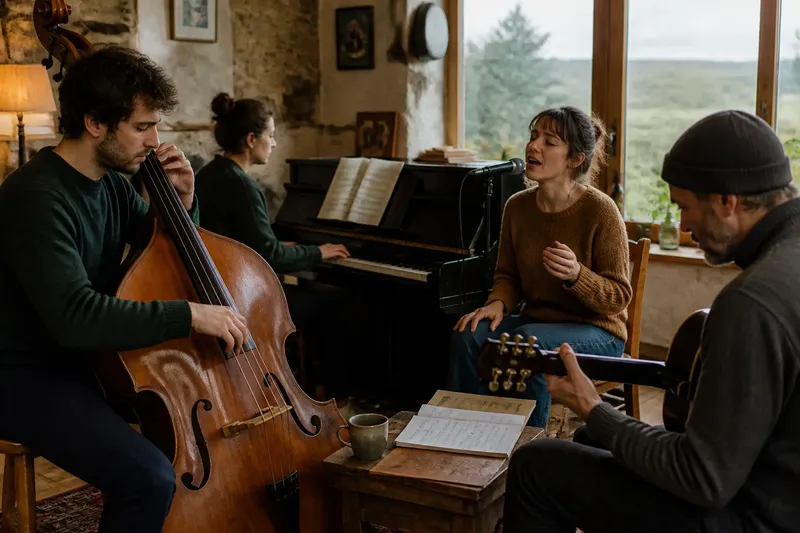
In a small ensemble, the bass player may be the person with the lowest instrument, or simply the musician taking the lower part. A cello, double bass, bassoon, left-hand piano or low guitar can all do the work. The role is less about volume than about making harmony and time legible.
A bass line makes harmony easier to hear
Chords can be busy objects: a pianist may play several notes at once, while a guitarist changes shapes under a tune. The bass often singles out the chord’s root, the note that gives the harmony its name. When that note changes, listeners can sense the music moving even if they cannot identify the chord.
That does not mean every bass note must be a root. A line may use another chord tone to lead towards the next harmony, or hold a note through a chord change to create a deliberate rub. But the root is a reliable point of reference, especially when learning a new piece by ear or keeping an informal arrangement together.
Try listening for the lowest note before you listen for the instrument. Does it stay put while the tune changes? Does it move at the same moment as the chord? Those are useful clues to how the bass relates to the harmony, even when several instruments occupy the same register.
Roots and chord changes give the ear a map
A bass part can outline a song’s harmonic route without spelling out every chord. If a passage moves from one stable chord to another, a bass player might sound the new root at the change and leave the rest of the chord to guitar, piano or voices. The result is a clear frame rather than a second, competing melody.
When the harmony changes quickly, placing a bass note precisely can matter more than adding extra notes. In a slow song, a long root may give singers room to shape a phrase. In a lively dance tune, the roots may arrive more often, helping the harmony turn with the beat. The chord symbols, score or ensemble arrangement can guide the choice, but listening to the other players tells you whether the note is landing with them.
Say you are accompanying a singer on piano and the verse moves from a C chord to an F chord. If you hold C in the left hand through the entire change, the singer may hear the old harmony lingering. If you move the bass to F as the accompaniment changes, the new chord becomes easier to feel while the right hand can remain light. The observable aim is a clear harmonic turn, not a louder performance.
Pulse is a shared feeling, not a drumbeat
Bass notes help listeners sense where the beat sits, but a bass line need not mark every beat. A held note can carry several beats; a short note may make a particular step in the rhythm easy to follow. The right choice depends on the music and on what the ensemble already supplies.
If a guitarist is strumming steadily, a bass player who attacks every subdivision may make the texture feel fussy. If the tune has a broad, unhurried pulse, a few well-placed notes can make the timing feel settled without turning the bass into a metronome. Think of the line as a handrail: it gives the group a dependable place to touch, but nobody needs to grip it at every moment.
Listen for the pulse in the whole room, not only in your own part. A singer may stretch the end of a phrase; a fiddler may lean into a pickup note before the beat. The bass can support those gestures by keeping the underlying movement clear, rather than copying every small fluctuation. In rehearsal, agree which moments are meant to breathe and which should stay firmly in time.
Space lets the melody remain in front
The bass can be musically active without constantly filling gaps. A low note has weight, so even a simple phrase may draw attention. If the melody is already ornamented, a busy bass line can make both parts difficult to follow, particularly in a small room where the instruments are close together.
Leave room by noticing what the melody does. If the singer sustains a note, a bass change underneath can gently mark a fresh chord. If the melody makes a quick run, a steady bass may provide contrast. If a phrase ends in silence, a short bass response can be useful, but it should sound like an answer rather than an interruption.
There is no rule that the bass must always be quiet or simple. Some arrangements bring the low part forward for a dance figure, a transition or a moment of contrast. The useful question is whether the bass is serving the piece’s current shape. When it takes the lead, the other players can make space in turn.
Shape the line with articulation and tone
Two players can use the same notes and give them different character. A bow can sustain and connect notes; a plucked string can make each attack distinct. On piano, the left hand can use a lighter touch or shorten a note. These choices affect how clearly the pulse speaks and how much space remains around the melody.
Pay attention to the end of each note as well as its beginning. A note that rings through the next chord may blur the change. A very short note may make a gentle song feel clipped. Adjusting note length can often improve the blend without changing the written part.
Tone matters too. A bright, sharply attacked bass can cut through a dense group, while a rounder sound may sit comfortably beneath an exposed vocal. Aim for a tone that the ensemble can hear without making listeners work around it. If the instrument’s sound carries strongly in the room, restraint in attack and volume may be more helpful than playing harder.
Small listening habits make the part more useful
For a fresh tune, learn the shape of the bass before adding decorative movement. Identify the first note of each chord, mark where the harmony changes and notice any place where the bass holds across a change. Then play the simplest version that supports the tune. Add passing notes only when you can still hear the chord route clearly.
- Listen for the lowest note at each chord change.
- Notice whether the group’s pulse comes from the bass, strumming, percussion or a mixture.
- Check that sustained notes do not blur a new harmony.
- Leave a little rhythmic contrast between the bass and the melody.
- Ask another player whether the chord changes are easy to follow from the sound of the group.
These are listening prompts, not rules to apply without regard for the music. A bass line in a folk song, a jazz standard and a hymn may have different habits. The part should fit the style, the arrangement and the people playing it.
What should you listen for in a bass part?
Does the bass always play the root?
No. Roots make harmony clear, but other chord tones and connecting notes can lead the ear towards the next chord. The root remains a helpful landmark when the arrangement is new or the harmony is hard to hear.
Should the bass play on every beat?
Not necessarily. A sustained note or a carefully placed attack can support the pulse without filling every space. Listen to what the other instruments are already doing before adding more rhythmic activity.
How can a bass player avoid masking a singer?
Keep attacks and note lengths suited to the vocal phrase, and avoid adding movement simply because a gap appears. If the singer’s words become harder to follow, try a simpler rhythm or a gentler touch.
What if there is no bass instrument in the group?
A low piano hand, a guitar’s lower strings or another part with room in its range can suggest the harmonic foundation. The aim is to make chord movement and pulse clear, not to imitate a particular instrument.
A clear foundation can be a simple one
When deciding what to play next, return to the main job of the bass line: make the harmony and pulse easier to hear while leaving the tune its own space. If the group can follow the chord changes and the melody still feels open, the part is doing useful work. That is often a stronger guide than asking whether the bass has enough notes.