The Scale-Run Shortcut That Leaves the Tune Behind
A melody practice routine that turns scales into useful preparation, then helps you shape phrases, catch rhythmic details and make a tune recognisable.
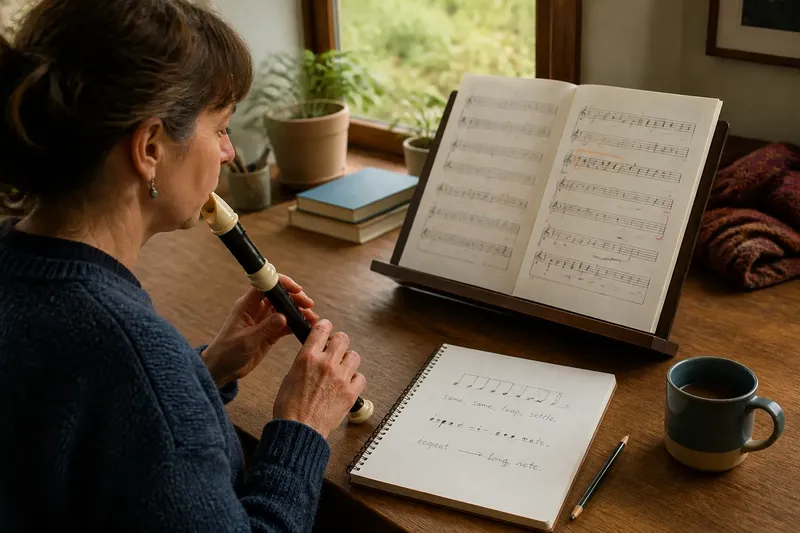
The common mistake in melody practice is to run the scale that matches a tune and assume the tune will follow; the cost is a line of correct notes that has lost its character. A melody practice routine works better when it treats the scale as a small warm-up, then gives attention to the tune’s particular turns, silences and repeated figures.
A scale prepares the fingers but not the tune’s route
A scale moves through a familiar set of neighbouring notes. A melody might leap away, repeat one pitch, pause unexpectedly or circle back before it reaches its resting point. Those choices create a tune’s identity, even when its notes belong to the same scale.
Think of a scale as a set of coloured pencils: it gives you the materials, but not the drawing. To learn the melody, notice what its notes do together: where a phrase begins, what changes, and how it comes to rest.
Imagine you are learning a short recorder tune with a dotted rhythm, two repeated notes and a long final note. You practise its scale smoothly, then play the tune and shorten the final note while rushing past the repeated pitches. The scale has prepared your fingers, but it has not rehearsed those rhythmic details. If you tap the dotted rhythm, speak the repeated notes, and then sustain the ending, the phrase should become easier to recognise and reproduce.
Give one short melody a week of focused attention
Choose a tune you can hear in a recording or read from a score. Keep the same short passage in view so you can notice its details changing as your playing settles. Mark phrase boundaries and any conspicuous long notes, rests or repetitions rather than covering the page in annotations.
- Listen first. Tap the pulse while the tune plays. If you hear a pause or a repeated figure, mark that spot; if the pulse is hard to follow, listen again and tap only the strongest beats before trying the melody.
- Speak the rhythm. Use a neutral syllable such as “ta” and keep rests silent. If the rhythm stays clear, move on to the pitches; if it blurs, slow your speaking and isolate the bar or phrase where it changes.
- Trace the contour. Hum the melody or move a hand up, level or down as the notes rise, repeat or fall. If the shape is clear, try it on the instrument; if not, listen to one phrase at a time and trace that smaller shape.
- Play a single phrase. Keep its rhythm intact, including awkward leaps and repeated notes. If the phrase holds together, connect it to the next one; if a transition breaks, work on the last few notes before the break and the first few after it.
- Use a scale for a named obstacle. Play the relevant notes briefly if a fingering or pitch pattern feels unfamiliar, then return to the phrase containing them. If the scale makes that passage more comfortable, use the tune to check it; if it does not help, practise the actual transition instead.
- Join two phrases. Play the end of one phrase straight into the next phrase’s opening. If the connection sounds natural, keep it; if it feels like an unintended gap, reduce the pause and listen for how the musical thought continues.
- Play the whole tune without stopping. Afterwards, identify one moment that kept its shape and one that did not. If the same passage loses its rhythm or direction, return to that phrase next time; if the tune remains clear, try beginning from a later phrase as well.
These are prompts, not a test to pass. If a bow change, breath or fingering needs extra attention, stay with that passage and leave another activity for later. The useful sign of progress is that you can hear and repeat more of the tune’s distinctive shape.
Listen for the small event that changes a phrase
“Up” and “down” are only the broad outline. A melody might rise by steps, leap to a single high note and retreat, or repeat a pitch before dropping. Listen for those exact moves, along with motifs: short combinations of rhythm and pitch that return later in the tune.
Try describing a phrase in a few plain words, such as “same, same, leap, settle”. That description gives your ear a small route to follow. If you lose your place, listen for the returning motif or the next long note instead of restarting at the bottom of a scale.
Rhythm can hide in plain sight. Tap a pickup, a dotted note or a rest before adding pitches. If a phrase sounds oddly flat, compare the length and weight of its repeated notes; equal treatment can erase the difference between a question and its reply.
Let breath, bow and touch serve the musical thought
On a wind instrument, plan a breath at a sensible phrase boundary without cutting off a connected line. On violin, choose a bow change that supports the phrase rather than interrupting it. At the piano, use a clear release or connection between notes. The instrument changes the method, but the aim is the same: let the shape be audible.
Ask where the phrase seems to arrive and what should happen on the way there. A rising line may gather energy before its destination; a descending line might soften, or it might remain firm. Listen to the tune before applying a familiar swell or fade by habit.
Say you are learning a melody whose first four notes return before a small leap. Keep the repeated notes light and close, then let the leap stand out without making it harsh. The expected result is that a listener can hear both the return and the change as parts of one thought.
Why does a scale run fail to teach the tune?
Should I practise the scale before every melody?
Use a scale if it settles your hands or clarifies an unfamiliar group of notes, then move directly to the phrase that needs it. It will not rehearse the melody’s rests, repeated pitches or expressive direction.
What if I cannot sing the melody accurately?
Tap the rhythm while listening, then trace whether the notes rise, fall or repeat. You can speak the rhythm before attempting the pitches, or work through one short phrase at a time from the score.
How should I practise a phrase that keeps breaking apart?
Speak or tap its rhythm first, then isolate the small passage where continuity fails. Connect that passage to the note before and after it, and return to the full phrase once the transition feels secure.
When should I speed up?
Try a quicker pace only when the rhythm and phrase shape stay clear. If the notes blur or the pauses disappear, slow down and restore those details before trying again.
Keep the scale in its proper place
Scales can help you become familiar with an instrument’s layout or settle into a key. They can also bring an awkward fingering to your attention. But comfort with a scale does not tell you whether a melody’s skip, rest or ending is ready to play.
For your next melody practice routine, choose one recognisable detail: a repeated note, a dotted rhythm, a sudden leap or the way the phrase settles. Practise that detail in context, then reconnect it to the surrounding tune. A useful last check is to play the passage slowly and listen for whether its distinctive event still comes through.